Saturday, 20 October 2012

The Good Stuff: Ed Wood

Ed Wood
Directed By Tim Burton
1994


Really? Worst movie you ever saw? Well, my next one’ll be better!

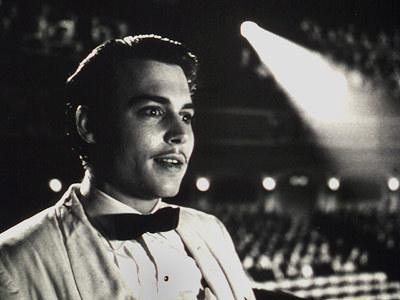
With Ed Wood, Tim Burton has a clear challenge: do you romanticise the Worst Director Of All Time, so that his films don’t look that bad after all, or do what a lot of other biopics do and just tell us how miserable he was?  Burton takes a trickier third option, and tells an inspiring, hopeful story about a guy trying to make movies and gain acceptance, while never shying away from the fact that Ed’s movies were really, no-fooling terrible.  It’s not a spoof, as there is no need to spoof something as car-crash dreadful as Glen Or Glenda.  Nor is it entirely wistful.  It’s pitched somewhere between, and its message that outsiders are never alone, and wanting to do something great can be enough, even if the end result sucks encapsulates most of the things Tim Burton has ever tried to say as a filmmaker.  There’s no doubt in my mind that this is Burton’s best film, and there’s a tremendously sweet irony in the fact that it’s all about a guy who made terrible movies.

At the centre of it all is Johnny Depp, almost unstoppably optimistic as Ed.  He smiles, ignores such petty filmmaking gripes as continuity and clumsy actors, and fawns unashamedly over his idol, Bela Lugosi, whose faded career he gives a last-minute jump start.  (Of sorts.  His reputation sinks even lower thanks to Wood, but Bela would argue there’s no such thing as bad press, so we’ll go with that.)  Their relationship is of course based partly on Tim Burton’s own with Vincent Price, but it’s also a handy metaphor for how Burton views Ed Wood.  He’s dimly aware of the man’s many failings, but more concerned with what good he’s capable of.  Martin Landau is magnificent as Lugosi, but for me the less-celebrated Depp is the star of the show.  It’s a slightly exaggerated, almost cartoony portrayal, making Ed more of an icon than a down-to-Earth normal human being.  But then, whoever said Ed was normal?

The entire cast are on top form.  Bill Murray is particularly wonderful as Bunny, one of Ed’s cohorts: it’s a performance that’s ingrained into every little movement, making Bunny one of the most real things in the movie.  Sarah Jessica Parker has the perhaps problematic role of Ed’s girlfriend, who eventually leaves him.  She does a great job of being the voice of reason when necessary “You make shit!  These movies are terrible!” but also providing Ed with a sympathetic ear.  She’s a tough, complex little character.

We get to see Ed’s most talked about movies get made, and his final “masterpiece”, Plan 9, is treated almost with awe but again, without ignoring the fact that it was stupid, stupid, stupid.  And that’s okay.  Ed wanted to be remembered, and in a display of typical optimism, Tim Burton tells us that he got his wish.  Ed would probably look at his infamous reputation with cockeyed misunderstanding, and see the good in it: all these people wouldn’t profess to hate him with such enthusiasm if they didn’t love him just a little, right?  And it’s that ability to see the good in things, even when they are definitely, categorizably bad, that Burton has captured so well.

It's funny and entertaining, certainly, because movies about movies (especially bad ones) are always a hoot.  But it’s the hopeful spirit that makes it a moving story as well: Ed’s grinning determination, the kindred weirdos he meets, the faith he inspires in them.  There isn't another biopic quite like it, which is fitting for a filmmaker like Ed Wood, who is arguably unsurpassed in his own way.  Seriously: Glen Or Glenda absolutely stinks.  In that particular case, Burton tells the tale of a longing transvestite much better than Ed himself managed, and that’s somehow no disservice to a man who was lucky to figure out which end of the camera pointed where.  The film about his life tells us that we must try, no matter the odds, no matter what everybody thinks, and no matter if they’re right.  That’s a hell of a thing to get from watching Plan 9 From Outer Space, and that, one hopes, ought to be Ed’s real legacy.

A Brief Public Service Announcement

Just a quick note on the present and future of Neil Is The Best Dalek.  (Which is a very grand way of saying "Things you can expect to see on this silly review blog generally read by six people, plus any passing family members when the computer's left on...")

Those of you who are good with pronouns may have noticed that "we" has mostly swapped to "I".  That is because contrary to the original (evil) plan in 2011, there's now only one of us (me) writing reviews.  It's all a bit awkward, but in a nutshell, Doctor Who didn't inspire quite the same interest in both of us, and the back-and-forth involved in compiling reviews was getting rather hairy.  Never mind: co-writer is now pouring her creative mindbabble into the brilliant Hillesque (chock full of insights on writing and, more importantly, hilarious Paint doodles), which of course you should all follow religiously.  Meanwhile, I'm still obsessed with Doctor Who, in spite of Series Six and, well, Doctor Who, so you'll be seeing more of that here.  Obviously.

You can also expect to see movies cropping up some of my favourites, some absolute stinkers, and a whole general bunch probably featuring superheroes in the coming months.  Starting with the very next post...

Cheers for reading!

NEIL LOVE DOCTOR.  WHERE DOCTOR?  DOCTOR LOVE NEIL?

Friday, 19 October 2012

Manhattan Miseries

Doctor Who
The Angels Take Manhattan
Series Seven, Episode Five


Here we go, then: two and a half years with Amy and Rory, and it’s finally time for them to go.  Many are celebrating, because let’s face it, for all the stuff that’s happened to them old Pondy and big-nose haven’t become much wiser or deeper as a result.  I’m sad, however.  Karen Gillan and Arthur Darvill have never been less than entertaining, they work really well with Matt Smith, and they’re owed a decent send-off.

The Angels Take Manhattan isn’t it.

Matt contemplates a future without Karen and Arthur.
First let’s talk about what works.  The Angels are back, and they’re back to zapping you through time, which was always creepier than snapping your neck.  (It’s wonderful nightmare logic to be afraid a monster is going touch or “get” you, and the Angels work superbly within those limits.)  The cherubic kiddie-Angels are terrifying, because of course they are.  And the New York setting – actually in New York, much as we all loved Wales – works well.  Cut out the Statue Of Liberty and they might as well have made The Angels Take Cardiff, but hey, if you can, do.

And Matt Smith’s good.  Of course he is!  The moment he sees a fateful chapter heading and staggers about, impotently furious, is amazing to watch.  He's great when he's angry at River.  Conversely, he manages to give her a quick kiss that doesn’t make me want to roll my eyes.

As for the plot...  Hmm.  Not unlike The Wedding Of River Song, there’s very little actual story here – Amy and Rory are doomed, the Doctor can’t intercede, the end – and the rest is windowdressing.  The guy who collects Weeping Angels?  Forget him.  The PI sent back in time at the start?  Him too.  The largest Doctor Who monster since the Cyber King?  I’ll get to that later, but for now let’s just say: pointless.

"Oh, hi. Hot water's off. And how's about some sandwiches?"
But it’s a neat, if frown-inducing idea, the Angels having a battery farm/hotel.  (Wait, so they're keeping people alive?  Is there room service?)  Their feeding habits don’t make a lot of sense since they can send Rory back a bunch of times, presumably forever, but at least it’s creepy.  Rory’s solution of killing himself to paradox the Angels to Kingdom Come is novel, if sad – seriously, things are bad when a character considers dying a life skill – and the moment where Amy agrees to go with him kind of works.  It suffers for having been done better in Amy’s Choice, and they undermine it by giving us another tragedy in the very next scene, but it’s not bad as a declaration of love, or something.

Alas, though, that plot.  It hangs on a series of predestination paradoxes, and can I say – enough with those already!  They’re a neat trick, provided you’re being tongue in cheek (which Moffat almost always is), but use them too much and the truth becomes clear: they’re just an excuse to have things happen for no reason.  The plot happens because it happened.  The important bit of a story is why it happened, and “because I read it in a book” isn’t much better than the Doctor reading this week’s script.

The dreadful inevitability of it all doesn’t even work, given how regularly the Doctor muddles about with time.  Just knowing the future doesn’t make a difference – why should it?  That’s an arrogantly Earth-centric idea that makes it reliably impossible to stop the JFK assassination, but leaves the Doctor curiously free to muck up the future of Planet Zog, which he surely does every time the TARDIS lands.  So he knows the future sometimes.  Big whoop: what is knowledge, anyway?  The show’s so inconsistent with this, it’s a wonder they ever bother to address it, and the theory here – if it’s written down, you can’t change it – is their weakest attempt so far.  Not least because they contradict it in the episode.

Anyway.  What we’re really here for is the end of these characters.  How does it fare?  Well, when your story is as long, convoluted and obviously made-up-on-the-fly as Amy and Rory’s, there isn’t so much an ending as a decision which arbitrary tragedy will randomly stick.  Let's see, Amy has clocked up years of childhood therapy, serious wedding jitters, a wedding that helped end the universe, the loss of her parents’ and her husband’s existence, the death of her husband (half a dozen times), death herself, the death of the Doctor, the sudden arrival of a baby, the loss of said baby to a space cult, total failure to go and find said baby, knowledge that baby grows up into her childhood best friend and a hardened space bitch who’s older than she is, the inability to have any more children, and a divorce resolved so suddenly you wonder why they didn't kiss and make up already.  We could justifiably have lost Amy, Rory or both of them at any point in all that, or when the Doctor already sent them safely on their way (which he tried to do in The Big Bang, The God Complex and, by omission of action, in The Wedding Of River Song), or even last week when they were angling to quit anyway.  The fact that we still didn’t makes their sudden stampsies-no-returnsies exit (getting zapped back in time by the Angels) all the more frustrating.  Why can’t the Doctor go and get them?  Well, why not?

As usual, Back To The Future did it better.
Yes, I’m aware that it would be a paradox, and we’re only allowed one magic wand make-everything-better paradox this week, because er.  But so what?  See Rory’s name on the tombstone, all by its lonesome?  That’s one timeline.  And afterwards, when Amy’s name is on there too?  That’s a new timeline.  They just changed Rory’s and Amy’s entire future in the blink (!) of an eye, so yeah, not really buying the whole “fixed event” thing this time around.

And as for the book, which is treated as 100% accurate proof of the future for no reason, and contains an epilogue that says she doesn’t expect to see him again for a while... well, what difference does that make?  What’s stopping him from popping back after she wrote it?  And hang on: didn’t the Doctor pop back to rescue Rory the first time he was Angel-zapped?  He could just as easily have lived to death in the ’30s, the Doctor just didn’t know about it.  Is ignorance the only defence against death-by-time-travel?

Pulling the rug out from under this oh-so-final ending is too easy.  It would have been more unexpected if The Power Of Three had actually panned out: have Amy and Rory leave the Doctor because, well, it’s time to go.  Sorry, Doc, but we lost our baby because of you, plus a million other things – no hard feelings.  It would have hurt, but it would have been a legitimate and organic end (perhaps even arcing back to the Doctor-as-Amy’s-imaginary-friend, with her “growing up”, something referenced in Three) rather than another timey-wimey curveball that must have taken all of a lunchbreak to conceive.  But such a thing would require an emotional decision that makes sense.  Even Amy’s decision to “Angel” herself back to meet Rory doesn’t, given the ruddy TARDIS parked behind her, plus Vortex Manipulator.  They even leave the Angel there afterwards, well-fed and off to its next kill.  Whatever, eh?

At least they went out the way they lived: in a shower of bloody confusing nonsense.  So long, you two.

"Honey, come look at this view!
It's like she's right outside the window!"
So what else is there?  Well, the Statue Of Liberty-as-Weeping Angel, an idea that withstands about as much scrutiny as an infant’s forged sick-note.  How could it move with no one noticing it?  If it was spotted anywhere other than where it’s supposed to be, wouldn’t it attract huge amounts of attention?  We know its footsteps are audible – we’re talking Mr Stay Puft – so why aren’t thousands of New Yorkers peering out the window?  Why does the damn thing need to go for walkies at all, given the hotel’s full of Angels who’ll do the job just as well?  And yeah, I’ll say it: people have been inside the Statue Of Liberty.  It’s a building.  There’s proof.  The aforementioned infant could pick this apart.

And oh goodie, there’s River.  She’s been good before, in Silence In The Library back when she wasn’t all va-va-voom, and The Impossible Astronaut when she reacted to the Doctor’s death with – I know, right! – believable emotions.  That stuff was brilliant, and Alex Kingston did wonders with it.  So often, though, River’s just a smug, super-capable femme fatale* who routinely puts the Doctor in his place.**  Which one do you reckon we get this week?  Have a guess.

River’s inclusion here is their last chance to make something of the family dynamic that never was.  It’s a tad late, and aside from a frigid cuddle and a kiss, there’s still nothing to suggest these three have anything in common.  Nothing about River suggests she grew up with these two, and nothing about Amy suggests River could be her daughter.  There’s been no mourning for the loss of Melody, and still no outright joy from River at meeting up with Mum and Dad – just Professor bleedin’ Awesome, now with trenchcoat accessory.  The sooner we see the back of her for good, the better.

For an episode intended as “heartbreaking”, The Angels Take Manhattan left me cold.  Logically, it’s built on sand.  Emotionally, it’s the victim of a character arc that’s cried wolf too often.  Karen and Arthur do their best, but Amy emoted more than this last week, and Rory’s got nothing to do but die, three times.  The Doctor hovers two steps behind the action at all times, which isn’t exactly inspiring.  River's dismal as ever.  The Angels, good here or not, are frankly way past their sell-by date.  And as a Movie-Of-The-Week, which is the focus this year in Doctor Who, it’s Blink 2: Blink Harder, with a dash of Ghostbusters II and The God Complex.  You’ve seen it all before.

Oh well.  At least it ends on a note of optimism.  The Doctor’s still got River!


*  Of course River is an actual femme fatale in this one ("River?  You're Melody?" is not Rory's shining intellectual moment) straight out of the pages of a (dreadful) gumshoe thriller.  This is probably supposed to make her seem even more yowza-inducingly awesome, but actually all it does is highlight how reminiscent she is of a trashy, paperthin fictional character.  Whoops!

Love is a many spleando-nah, just kidding,
it's people saying "Yowza" occasionally.
** I hate that last bit more than the wisecracks, more than the arch line delivery, even more than the gun-toting and the use of “psychopath” as a term-of-awesome.  River running circles around the Doctor just doesn’t feel right.  Her Vortex Manipulator’s better than the TARDIS, which she can pilot better anyway.  She always knows more about the situation than he does.  Even the hackneyed “hubbie” dialogue makes the Doctor seem more definable, smaller, less remarkable.  It’s terrible because it doesn’t feel earned, and because no character should, by their inclusion in an episode, make the Doctor seem less interesting.  Especially when it’s only in aid of bigging up a tiresome Mary Sue who’s been the focus of an entire season, has appeared in roughly a year’s worth of episodes and still hasn’t grown in any direction as a character.  She certainly doesn’t enhance the Doctor by being married to him, as all the important points of their relationship still seem to elude the cameras.  Their love story, such as it is, remains a winner-by-knockout of tell, rather than show.

Wednesday, 17 October 2012

The Proverbial Good Chris Chibnall Episode

Doctor Who
The Power Of Three
Series Seven, Episode Four


When it comes to not liking an episode, or a film, or a breakfast cereal, it’s not as if I sit with my arms crossed and decide it will be rubbish before I actually know.  I judge every episode (or book, or bowl of fruit) on its own merits, and it so happens that everything I’ve seen with “By Chris Chibnall” on it has been various shades of rubbish.

Above: Not By Chris Chibnall
If nothing else, he’s consistent: uninspired plots, flat characters, and an all-consuming predilection for cliché.  Whether it’s Doctor Who, Torchwood, Law & Order UK or Life On Mars, his scripts are usually the least imaginative, and the most likely to induce groans.  His most recent effort, Dinosaurs On A Spaceship, suffered from an all-over-the-placeness that made a welcome break from going over a previous episode with some tracing paper, but it was still less an improvement than just a new kind of problem.

Then along comes The Power Of Three.  And it’s good.  Not good like Dinosaurs On A Spaceship – which was neither noxious nor particularly noteworthy – but a genuine, Would Watch Again highlight.  No, really.  No, really.  It’s got funny bits, well-judged emotional bits, and bits that make good use of the characters.  It’s a warm, sweet, nifty little episode for the most part, and… look, are we absolutely sure it’s him?

The Power Of Three mostly forgoes obvious or famous monsters (apart from a hilarious garnish of Zygons), focussing on a brilliantly obscure menace: tiny black boxes that just sit there.  All the ensuing world invasion stuff (with news coverage and celeb cameos) is very Russell T Davies, but we see that so seldom nowadays it’s actually kind of novel, especially with Matt Smith in it.  Also, those inane little boxes are a neat way to turn it on its head, as is the timeframe.  It takes place over a year, a fact that irritates the Doctor no end.

I love this.  It’s great to be shown how life with the Doctor varies from the norm, and there’s nothing like a practical demonstration.  Having him dip in and out of proceedings, and whisk Amy and Rory off on a seven-week adventure and back again without interrupting the party they’re throwing, heightens the contrast between Amy and Rory’s two lives, and reminds us what the episode is really about: their growing commitment to the “real” one.

Okay, so in an ideal world there’d be no reason to leave the Doctor, and they’ve apparently been juggling things well enough for ten years now.  But the idea that it’s time to go lends an arc to Amy’s (and by tenuous extension, Rory’s) time on the show.  The Doctor has been presented as her imaginary friend, so it’s time for her to grow up.  Makes sense to me.  (As for Rory, it’s hard to say.  His involvement has always been pretty much go-where-Amy-goes, so his decision to leave is as solid now as it ever was.  And unfortunately, in his second-to-last episode, he has as little to do as ever.  He’s a really good nurse!  He’s on the spaceship!  Now he’s not!  Rory, we hardly knew ye.)

Funny Caption Not Found.
It's too good.
The Doctor sees it coming, of course, so he wants to make the most of them.  This is very well handled.  From the Doctor’s pained, adorable delivery of “I… miss you,” to Amy’s equally agonised admission that there were years when she couldn’t live without him, their scenes together are some of the best they’ve had in ages, not just knocked out of the park by Smith and Gillan, though they are, but really well articulated in the script.  The Doctor’s “I’m going to you” speech reminded me of a similarly showy, much more pointless one in Night Terrors.  This time though, it’s pertinent and it’s poignant.  Bravo.

So, it’s a great episode for the cast, an all-round red letter day for Chris Chibnall, and the story’s small but neatly-formed.  Except it doesn’t stay that way.  Sooner or later you’ve got to explain what the boxes actually do, and the moment The Power Of Three hedges its bets, it all falls apart.

It’s as if two episodes are competing for space.  There’s the small peripheral threat that keeps the Doctor popping in and out of events, bringing all that juicy Doctor/Amy stuff to the fore, and the Russell T Daviesesque Earth Invasion episode.  The former works beautifully.  The latter comes with all the bells and whistles, like a portentous villain whose motives aren’t clear, cool-looking monsters (those scary male nurses) that don’t need to be there, several random ideas (the lil' girl droid) stuffed in there just because, and enormous mounds of stupidity in resolving it all.  And of course, the really disappointing purpose of the boxes: a way of killing all humans.  Oh, really, again?  And they do it by stopping our hearts.  That’s it?  That’s the best you could come up with?

There’s no point going on about it, so just briefly: if that’s all they do, why did it take a year?  What about all the other random stuff they do – why any of that?  Why’s it so important that we’re total magpies and can’t resist taking them home, why did it take the Doctor so long to realise that’s clearly a bad idea, why bother since we see one teleported straight into Amy and Rory’s bedroom, and what the hell’s so appealing about a box?

They're like giant man-made rat droppings!  I want one!
Before you know it the small character-piece is going at full gallop, and a third of the population’s dead.  A third!  And after a bit of Doctorly heart-restarting, which veers awfully close to The Shakespeare Code and sounds like it was written for that other guy, he brings everybody back with a wave of the (urgh) sonic screwdriver.  Meh.  You don’t feel any great loss in the first place, and neither do the characters, so it’s no skin off my nose when it turns out everybody lived.  Why do the worldwide catastrophe thing if you’re going to be so offhand about it?

There's nothing wrong with plots that are small-but-sweet; in fact the more concise they are, the better.  Look at The Eleventh Hour and Amy's Choice.  Big character stories, just-right-sized plots.  The Power Of Three should have followed suit and tightened the story to fit.  Less epic, more quirky.

As it happens, the episode’s last-ditch attempt at Rusty’s Greatest Hits doesn’t derail it completely.  (And nor does the bizarre last-minute attempt to explain the title.  "Cubed"?  What a stupid, irrelevant coincidence.)  The good stuff, the funny, warm, character-developing stuff is gold.  And there’s more: we’re lucky to get more of Mark Williams pottering around as Rory’s adorable dad.  He offers some great ideas on what the boxes might be (most of them more interesting than the truth), and even grills the Doctor on the fate of his companions.  (The ease with which he rattles the Doctor here is somehow consistent with the character's innate cuddliness a sheer credit to Williams.)  Also, although it’s probably a nerdy enough reference to leave some out in the cold, Jemma Redgrave makes such a graceful go of the Brigadier’s daughter that I was glad to meet her.

The Power Of Three scratches an Amy/Rory itch I’ve had for a while, and for the bits that focus on that, it’s one of my favourites.  As for the rest... well, the plot was always going to be windowdressing around the episode's actual point, so annoying as all this is, and unfortunate that they couldn't get this bit right, it doesn't really matter that much.  There are plot episodes, there are character episodes, and there are episodes that can't be bothered with either.  At least this is the best of one world.

Tuesday, 16 October 2012

Corral Dilemma

Doctor Who
A Town Called Mercy
Series Seven, Episode Three


Goodie gumdrops, it’s Toby Whithouse!  I’ve got a bit of a soft spot for his episodes after the wonderful School Reunion, the hilarious Vampires Of Venice and really-good-in-places The God Complex.  He’s great at writing the Doctor, great at writing comedy, and well, he struggles with plots, but we can’t have everything.  A Town Called Mercy features that tricky premise, the moral dilemma.  They’re easy to set up, buggers to sort out.  How does he fare with this one?

Okay, so Kahler Jex is an alien doctor stuck in the town of Mercy.  He escaped his shadowy past and is repenting for it by helping the people there.  But one of the cyborgs he wronged is out to get him, and it’s only a matter of time before it gets impatient and wades into town to finish him off.  Once that’s done, it’ll go away.  What should the Doctor do?  After hilariously (and satisfyingly) planning to bundle everyone into the TARDIS and get out of there, which is always the unspoken obvious solution, but then not doing it when he finds out the truth, the Doctor’s left with a clear choice.  Boot Jex to his doom, or suffer the consequences.  (Or that TARDIS thing.  Just sayin’.)

The TARDIS:
Mysteriously not solving plots since 1963!
Jex is a war criminal, no doubt.  But as the local sheriff, Isaac points out, he’s also doing good work and that’s all the Mercy folk need concern themselves with.  Plus, Jex’s dark deeds ended a war and saved millions of lives.  What about that?  The men behind the atomic bomb have been grilled aplenty in reality and in fiction, and it always comes down to peace being bought with atrocities, and that being nobody’s ideal solution, but nonetheless appearing to be the only way out at the time.  There is no easy answer, especially once the bomb’s been dropped.  The only thing anyone can agree on is that nobody’s happy afterwards.

Does Jex deserve to die?  Depends who you ask.  (And anyway, some people wouldn’t consider death a punishment, as it precludes suffering.)  Does he deserve punishment?  Absolutely.  But isn’t there anything between killing him and letting him go?  No authorities on the homeworld to try him?  No chance that helping Mercy for the rest of his life counts as penance?  It’s a tricky one, so it’s enormously disappointing that after all that, Jex self-destructs his ship with him in it.  Oh.  Doesn’t make much difference from the cyborg shooting him, really, and wasn’t he more or less ready to die at the halfway point?  (Yeah, he was trying to talk his way out of it, but all he had to do was step backwards.  Some part of him seemed ready for the inevitable.)  No story should climax with something it did earlier.

It’s a deeply dud solution, leaving Mercy without the doctor Isaac died to protect and, yeah, rendering his death pointless.  Also the cyborg Gunslinger is appointed as Mercy’s new sheriff… but he’s a war criminal too, even if he was Only Following Orders.  Lest we forget, he shot Isaac dead.  If he gets to make peace in The Land Of Second Chances, why can’t Jex?  Wasn’t this guy a soldier before he was a cyborg?  What did he do in the war?  Was all of that forgiveable?

What’s really annoying about it is the way it leaves the Doctor out of the decision making.  At first he’s happy to throw Jex to his doom; his mercy over the years has racked up its own body count, so one more life, this time a guilty one, seems fair.  But really, does it?  Isn’t that tantamount to what Jex did – one life, to save a group?  He changes his mind when Amy rightfully (if obviously) points this out, and spends the rest of his time keeping the Mercyfolk at bay, eventually sending Jex to his ship, endangering them all anyway, surely marooning some other town in the same conflict and resolving little.  When Jex blows himself up, the Doctor can do nothing more than agonise on the sidelines (and, we must awkwardly conclude, thank his lucky stars that someone else took the plunge).  Jex could have taken this way out at any point.  Regardless of his (begrudging) moral yo-yoing, the Doctor ultimately doesn’t make a difference.  And that’s the opposite of what he’s supposed to do.

Brrr, it’s all getting a bit serious in here.  What else is there?  Well, Toby Whithouse’s aforementioned comedy skills are put to brief good use: the Doctor’s opinion of “Keep Out” signs and his conversation with a barmaid are hilarious enough.  (Finding out he can speak horse is perhaps one cutesy step too far, but oh well, they’re unlikely to go back to that.)  Matt Smith is good throughout, particularly when he first speaks to Jex after finding out the truth.  It’s understated bliss until he shouts at him, but eh, everybody shouts now and then.

Amy sort of shines here, being the one to keep the Doctor on track; a pity it’s such an obvious point to make, and a bigger pity she didn’t have this conversation with him last week when he successfully offed the bad guy.  It’s also a shame the observant Jex whittles Amy’s strengths down to her being a mother, which as it happens has impacted her personality in no way whatsoever.  If there is an important thing about Amy, it’s not the child she and Rory produced.  They’d have to have raised it for that to make any difference.  Rory gets nothing to do, something they make a joke out of; I’m not entirely happy with that, but what’s new?

No chance he could say "You seem like an all right
sort of bloke, sorry about this mess we're in"?
The guest cast is impressive, although Adrian Scarborough’s transition from loveable-but-preoccupied eccentric to the old We’re Not So Different, You And I is annoyingly jarring.  (Does absolutely every character ever put behind bars have to say that?)  He’s not wrong, of course, and the Doctor’s occasional bouts of genocide have been a cornerstone of the series since its return, but they don’t find any use here for the comparison.  The Doctor did commit ghastly acts to spare further ones, and his punishment is living with it while he helps people.  Jex is denied that option.  Annoying.

Anyway.  Ben Browder makes the potentially sugary-sweet Isaac seem plausible, and the American accent helps.  He could have given the extras a few tips.  What else?  The special effects are minimal, so they’re fine.  The narration at the start and the end is pointless, bookending the story with a redundant bit of misdirection.  I guess the Gunslinger looks cool.  I’m not sure he learned anything from all this; the scene where he spares a church-load of innocents is probably supposed to be moving, but it’s consistent with his behaviour since Minute #1.

This isn’t the first episode to grapple with a big question and shrug its shoulders in lieu of an answer.  But in any moral dilemma, the ending is everything, and this one didn’t satisfy me.  It’s no deus ex machina, but nor is it the Doctor tussling with a decision and learning from it, which is surely the point.

Monday, 15 October 2012

Jurassic Ark

Doctor Who
Dinosaurs On A Spaceship
Series Seven, Episode Two

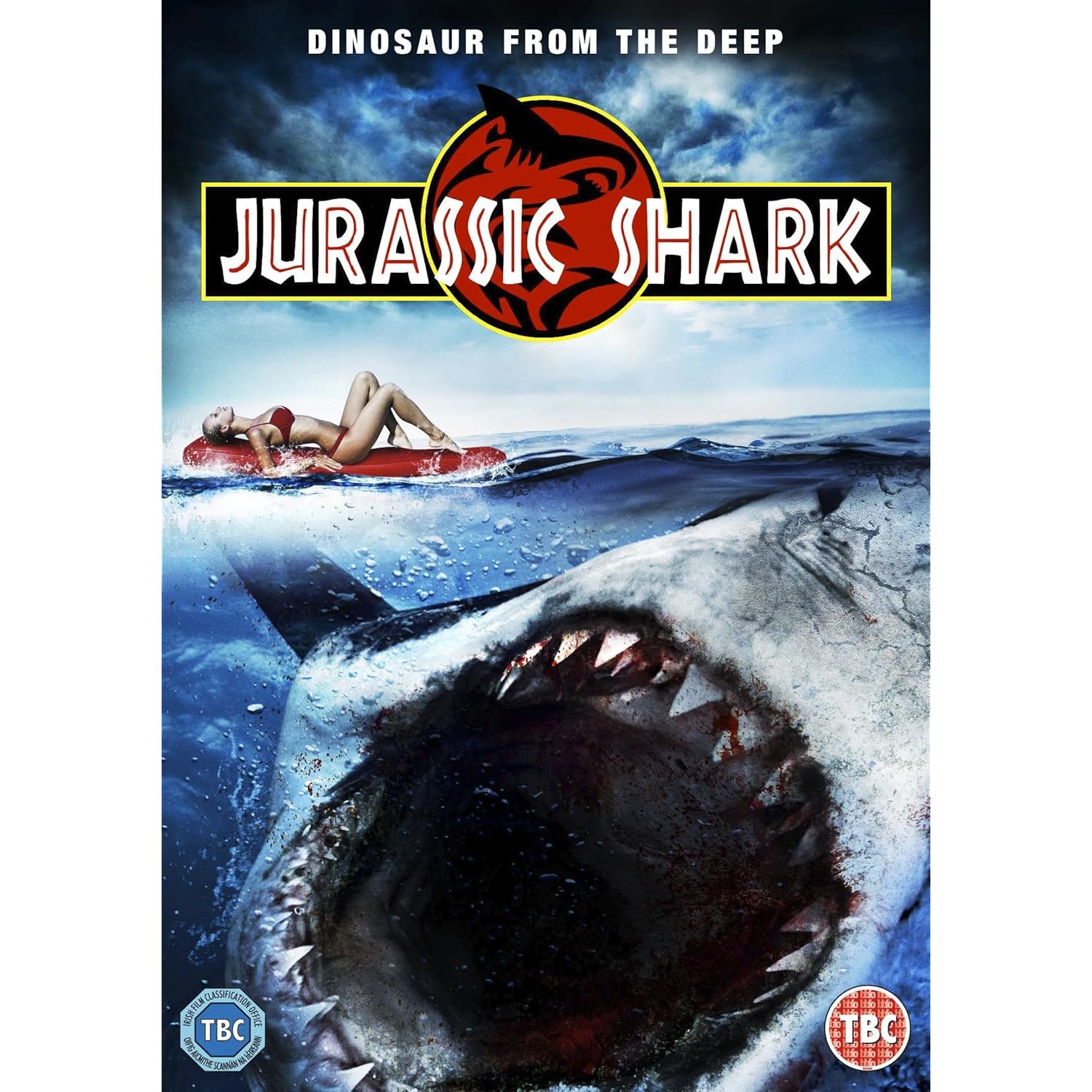
How else can we let them know it is both jurassic and shark?

Where to begin describing something called Dinosaurs On A Spaceship.  Such a title is so utterly idiotic, it’s almost bulletproof.  Oh, so you didn’t find any subtle nuance or intricate plot detail in there?  Of course not, it’s called Dinosaurs On A Spaceship.  Moffat’s promised Movie-Of-The-Week theme could not be any more apparent than here, an episode that signals practically by semaphore that its intentions are fun, and dumb.

Despite sounding like a B-Movie with approximately one idea in its head, there’s actually a lot crammed in here: a lot of characters, a lot of ideas, and a few too many changes in tone.  It feels like a well-intentioned eight-year-old put it together, excitement finally giving way to an ice cream headache.

From Queen Nefertiti in 1334 to a spaceship in 2367, meeting John Riddell in 1902 and finally collecting the Ponds (plus Rory’s dad, Brian), the pre-credits sequence leaps about like one of Steven Moffat’s more ambitious finales.  It seems like a lot of work to get us to some dinosaurs on a spaceship, and I’m not sure it’s worth it.  Do we really need Queen Nefertiti and a chauvinist game-hunter, as well as the Doctor’s usual chums, now with comedy dad?

Not that I mind the dad: Mark Williams is an absolute delight as Rory Senior.  But he’s sharing the guest spot with two randoms, not to mention Amy and Rory, 50% of whom usually end up twiddling their thumbs in the action department.  It might have worked better if the Doctor had missed Amy, grabbed father and son by mistake and left Mr and Mrs Horrible Histories out of it.  These characters only seem to be here so they can give themselves something to do, and they’re embarrassingly one-note, she with the ancient Girl Power, he with his “very large weapon”.  What does the Doctor see in them?

For the most part, this is not an episode for deep thought.  (What with those Dinosaurs, on that Spaceship.  Damn you, title!)  Although on that score, there’s a nice moment referencing Amy’s gradual distancing from the Doctor (“You’ll be here till the end of me.” “Or vice versa”), and it’s nice to see someone writing their characters in some kind of direction.  It's handled really well, although with no mention of the divorce or a possible second marriage, but we’re probably meant to forget about that one.  Only too happy to oblige!

Unquestionably, straightforward fun is the episode’s aim, and unusually for Chris Chibnall, it is occasionally very funny.  Not all of that’s down to Matt Smith, although he can make an “Eugh” noise or a simple question like “Is it?” sound funny like nobody else.  Some of it’s actually funny on the page: “Six hours is a lifetime.  Not literally a lifetime, that’s what we’re trying to avoid!”  /  “Isn’t it obvious?” “Um, it’s sort of the opposite of obvious.”  /  “Is that a kestrel?” “I do hope so!” “The beach is humming.” “Is it?”  Coming from a guy who still sees mileage in lines like “He’s picking us off, one by one!”, this can only be promising.

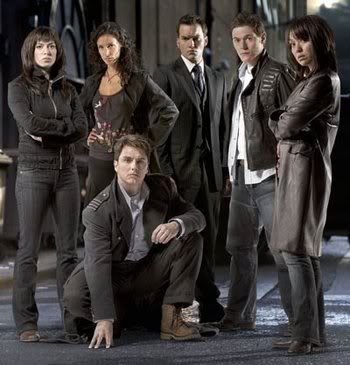
Fun fact: Torchwood was a sitcom until BBC execs
panicked and removed the laugh track.
But it’s far from consistent.  Some of the innuendoes ought to be sent back to the ’70s where they belong, and pointing out that they’re terrible innuendoes is no excuse.  Amy’s tiresomely wacky this week, particularly when acting like the Doctor (because there are so many characters in this that the companions have companions), and her attempt to get a high-five from Nefertiti is sheer cringe-fuel.  Oh, and I might love Brian, but that single-entendre about his balls, well, needs no further discussion.  Ugh.

The worst bit, though, has to be the robots.  I like Mitchell & Webb and I’m all for putting comedians in Doctor Who, so long as they’re bringing something to it.  David Walliams was brilliant last year as the spineless Gibbis, and Peter Kay was superb as the sinister Victor Kennedy (less so as the fat-suited Abzorbaloff).  But these two Comedy Robots (it must be capitalised) are firstly unnecessary, because who looked at an episode involving spaceships and dinosaurs and decided it needed more whimsy, and secondly in need of a new joke book.  “Oh I’m so scared!  Actually I might be, a little bit of oil just came out!”  Ye-eah, no.  All their low grade Peep Show-esque bickering grates like hell, and when they were deactivated, and started singing “Daisy, Daisy”, I had my head in my hands.  It hurts to imagine two professional comedians giving this stuff the once over.  A 2001 ref, really?  Just say no, guys.

The worst thing about the robots, though?  They’re not just comic relief.  I mean, they plainly are here for the hyuck-hyucks, but the plot also requires them to gun down a sympathetic Triceratops, maim Brian and murder a ship full of Silurians.  Which brings us to the major problem with Dinosaurs On A Spaceship: the tone.  It’s all zany hijinks one minute, sinister murderousness the next… and then back to the zany.  Take the scene shortly after the Triceratops dies – itself a low blow – when Amy and Riddell start zapping dinos to unconsciousness.  Never mind that they’ve set phasers to stun: the gleeful way they go about gunning them down, coupled with Amy’s stunningly witless “The sooner this lot go back to being extinct, the better!”, beggars belief.  Guys, remember that Triceratops that just died?  Hey, Script Editor!

Junior me finds this inappropriate.
Also, ook, ook.
Fair enough if your episode has about as much depth as a comic drawn for this year’s Doctor Who Annual, but you can’t just expect that to work in amongst murder, semi-genocide and a bad guy expressing pleasure at “breaking” someone in.  David Bradley, incidentally, is marvellous as Solomon.  A black-and-white bastard with no redeeming features only ought to come along once in a while, and Bradley’s clearly the man for the job, oozing real menace when casually ordering the (nyurgh) Comedy Robots to injure Brian.  But that stuff with Nefertiti?  Too far.  And given that this episode is aimed squarely at, well, me when I was seven years old, it’s inappropriate as hell.

Bradley gives Matt Smith an excuse to do some seriously dark Doctoring, and I like it to an extent.  Obviously it’s a pleasure to watch him work, but having the Doctor then engineer Solomon’s death-by-missiles (because there are missiles heading for the spaceship, oh yeah, right, that plot thing) seems a big step too far.  Yeah, we’re dealing with a seriously bad man here, but so?  Fair enough if they’re going to make something of the Doctor overstepping his bounds, but no one even mentions it.  We’re left with another stupidly callous plot point in amongst a load of dinosaur-themed tinsel.

It's a mess.  It’s a fast, sometimes-funny episode, no doubt.  Some of it actually matters: that moment between the Doctor and Amy is long overdue, and well put.  The dinosaurs look really good, which should not to be taken for granted.  And certain visuals, like the beach/engine room, and the absolute knockout shot of Brian sitting on the TARDIS step with a cuppa admiring the Earth from space, will stick in my mind.  But amazingly, for something with a dumb-as-a-plank title, Dinosaurs On A Spaceship just doesn’t know what to make of itself.  Perhaps Chibnall took a little too much inspiration from Snakes On A Plane, which was edited at the last minute to suit an older audience, and automatically lost the age group who would actually have appreciated it.  And perhaps a series going for a Movie-Of-The-Week feel could aim a little higher than Snakes On A Plane.

Saturday, 13 October 2012

We're Back! A Dalek Story

Doctor Who
Asylum Of The Daleks
Series Seven, Episode One


Those blurry Daleks, the ones with no lines?
Totally worth that redesign.
Ah, Daleks.  Not long ago, Doctor Who couldn’t seem to get enough of them, showering us with angry pepperpots every year, regular as Christmas.  Then came Victory Of The Daleks, an episode seemingly only there to reintroduce them, followed by… nothing, cameos notwithstanding.  “A rest,” said Steven Moffat, pointing out (not without reason) that as the universe’s most reliably defeatable bad guys, absence might make our hearts grow fonder.  Okay.  That renders Victory even more pointless, what with the expensive redesign, but fine.  Then what? 

The plan is to make them scary again.  (As with most of Moffat’s secret plans, we know this because he said so.)  Behold, the Asylum: a planet filled with all the deranged Daleks that survived the Doctor over the years.  That’s a good start.  Less of the grand invasions and barmy plans, more of the scary killing machines that are gonna get you, harking back to what’s scary about them in the first place, their relentlessness.  The Asylum is dimly lit, filled with creepy corridors and the sound of scraping, rusty, not-quite-dead Daleks.  10/10 for atmosphere.  That scene with Rory, and the eggs, and the ter...min...ate?  Loved it.

But lighting and set dressing can only do so much.  What about the Daleks?  Er.  Aside from some seriously menacing creaky noises, they mostly advance slowly towards the Doctor yelling “Exterminate” whilst not actually doing anything exterminatey.  Not exactly breaking with tradition, is it?  And the Daleks outside the Asylum, so incredibly powerful that they’re able to scoop up the Doctor, Amy and Rory with no trouble whatsoever?  They bottle their umpteenth chance to live in a Doctor-free universe, and send him to do their dirty work because they’re too scared.  Huh.  Scary?  This lot?  Who now refer to the Doctor as “The Predator” and won’t kill him because it’s just too much fun hating him, and – after losing their memory of all things Doctor, including their fear – still don’t shoot him on sight?  They’re Daleks!  See a thing, kill it!

As any child knows, human + Dalek = looks-like-a-thingie face.
As if giving up on the idea of bona fide scary Daleks, Moffat concentrates on diluting the brand.  It’s now possible, using nanobots, to turn someone into a Dalek.  And not just the gooey betentacled monster inside the pepperpot, which started out human-shaped anyway, but a Dalek: bumps, egg whisk, Mini lights and everything.  Right.  As well as trespassing distinctly on the Cybermen’s turf, and limply reversing the Dalek-into-a-human story that was Rob Shearman’s Dalek, this is also a pretty obvious re-do of The Empty Child.  And frankly, as nanobots-that-turn-you-into-things stories go, that one – with its brutal, inexorable transformations into mindless zombies – beats the slow crawl of “You’ll eventually become a Dalek if you don’t wear this bracelet” miserably to the ground.  (And about creating a Dalek by subtracting love and adding hate?  Aww!  The scary Daleky-waleks don't have any love!  Ahem, terrifying.) 

Still, the remote-control zombies are successfully creepy, and the Doctor’s chats with Dalek spy/corpse Darla Von Karlson-sounds-like-Dalek are a highlight.  Matt Smith gets to do his awesome don’t-mess-with-me thing in these scenes, including a superbly menacing chuckle, and Darla gets the delectably cold response to “You’ve got kids” of “I know – I read my file.”  This stuff still detracts annoyingly from the menace of the Daleks, and it’s far from original, but taken on its own: not bad.  This year’s busload of doe-eyed newcomers ought to enjoy it.

If I appear to be skating around the plot, well, that’s because Asylum Of The Daleks basically hasn’t got one.  After a whizz-bang opening where our three heroes are kidnapped by Dalek agents, it takes about ten minutes of Nicholas Briggs yapping for the Daleks to explain why it was necessary.

Okay, say the Daleks: so there’s an Asylum full of mad Daleks, and we won’t kill ’em because hate is beautiful (just go with it); but there’s a hole in the Asylum where a ship crashed, and we think the bad (er, worse) Daleks might get out (though at no point in something like a year have they made any attempt to do so, and anyway they have no transportation); so forget that beautiful hate bit, let’s blow it up anyway.  O…kay.  The Doctor is needed to switch off the planet’s forcefield from the inside (he what-what-what?), and Amy and Rory are there because apparently the Doctor usually has companions (seriously?), and… yeah, this doesn’t hold together at all.  Even the Doctor seems confused.

So the plot’s taking a backseat to the scary Daleks, regardless of how well that worked out.  What else?  Well, Amy and Rory have some character development this week: they’re divorced.  Wait, they’re… what?  After all they’ve been through, including death, marriage and having a love strong enough to rip through time?  Divorced, as in past tense?  We skipped the fighting, the separation, the times when they would have inevitably thrashed all this out and considered the consequences, straight to the papers being signed?  So no build-up, no context, and absolutely no sense of emotional weight.  Cheers.

I know couples often split up because of breakdowns in communication, but this is ridiculous: Amy can’t have kids so she kicks Rory out (because no way could they adopt, or keep trying, or see a doctor, or see the Doctor), and he, bewildered, never asks why?  Yeah, right.  To make matters even worse, all it takes is a brief conversation in this episode, the same day they got divorced, to put everything back together again.  Yeah.  Right.

The couple divorced, citing "easily reconcilable differences".
Just no.  If you’re going to completely wreck a character’s relationship out of the blue (though here’s a bright idea: don’t!), especially one that has proven itself time and again, there needs to be a good reason.  Skipping ahead because of timey-wimey doesn’t work.  And absolutely don’t then patch it up so easily that we’ve no idea how things got that bad in the first place.  But hey, at least it’ll lead to some character development in future, as they discuss how they got divorced, and then got re-married!  Once again: yeah, right.  I know they’re leaving soon, and Moffat’s obviously run out of stuff for them to do, but plumping for the desperately ridiculous is not the way to go.

So.  Stupid plot, stupid character development, silly Daleks, pretty good lighting job.  What else?  Well, there’s Oswin, the companion-in-waiting, who’s got a bad case of the Dalek bumps.  Jenna-Louise Coleman is a bright and fun presence, and attacks her slightly-too-smug dialogue ("Chin Boy"?) with admirable vigour, but she spends the whole episode in a little room talking to herself, so it hardly seems fair to judge.  Plus, sad as her story is – and knowing she’s coming back rids it of most of its pathos – it’s just another mark against Operation: Make Daleks Scary.  The thought of Nick Briggs sobbing into his vocoder won’t send me behind the sofa.  At least, not for the right reasons.

Asylum Of The Daleks looks great and has some admirable aims, but there’s just no real commitment to any of it.  (They don’t even live up to the much-publicised appearance of Every Dalek Ever, shoving all the ancient Daleks into the shadows with nothing to do.  You’d need a magnifying glass and a spotter’s guide to tell the difference.)  Pretty much the only important bit is Oswin’s nifty deletion of the Doctor from the Dalek memory bank, but that won’t make much difference in the long run.  Oh right, so now they’re going to exterminate him for realsies?  They get the chance right here and now, and still don’t do it!  And that’s before we get onto the what-were-they-thinking horror of the Daleks chanting “Doctor who?” like a bunch of nitwits.  Plus the Doctor saying it over and over, to the vomitous horror of this fan, worried sick they’re going to turn it into a catchphrase.  Bleurgh.  Please no.

There are worse Dalek episodes.  There are better ones, too.  Better luck next time.

Wednesday, 23 November 2011

Celebrating 48 Years Of Stockholm Syndrome

Doctor Who
An Unearthly Child
Season One, Story One


Strange white shapes swirl in the blackness.  A mesmerising tune throbs and wails.  The strangeness gives way to a junkyard shrouded in fog and darkness: a police box, more like an obelisk, stands among the detritus, a strange hum emanating from within.  The first ever episode of Doctor Who begins.

What more can you say?  The opening gambit of schoolteachers Ian and Barbara following the mysterious Susan home from school, only to find a police box guarded by a deceitful old man, is strange and thrilling.  Ditto what they find within: the TARDIS, a glittering spaceship that’s a lot bigger on the inside.  And just when you think it can’t get any more amazing, the old man refuses to let them go, flicks a switch and sends them hurtling aimlessly through time and space.  If you think the post-2005 Doctor is starved for company, get a load of this guy: he takes hostages.

Mine now.
William Hartnell is mesmerising as the Doctor.  He’s unquestionably the leader, but it’s still up to William Russell’s humanely strong Ian to fight the battles, and earn the audience’s sympathy.  The Doctor, on the other hand, is a lying, selfish, callous individual, quite happy to offer cavemen the secret of fire if it means his own survival and willing to cave in a man’s skull just to speed up his escape.

He’s a far cry from the lovely wizard with a magic wand we’re more used to nowadays.

I agree that the original Doctor is a far cry from his modern counterpart, but I don’t think it’s because he’s a lovely wizard now.  He might run around yelling a lot more, but he’s still lying, selfish and callous.  I think the difference is that these days he stands on a chair and yells at the top of his voice ‘LOOK AT ME, I’M LYING’ and we’re meant to think that’s impressive and acceptable, whereas back here, it’s not acceptable and that’s why it’s good.

But the modern Doctor would never kill a man purely to speed up his escape.  This Doctor just doesn’t care about human life.

When the 10th Doctor euthanizes that Cyberwoman, he doesn’t get her permission or try to help her, he just decides she’d be better off dead and kills her.  Where’s the companion to step in the way and say, ‘no, that’s not acceptable’?

That’s all incorporated in the Doctor now.  He’s happy, sad, compassionate, angry, fire, ice, salt and vinegar, puppy dogs’ tails…  William Hartnell was part of an ensemble, with each character offering a different thing, but now the Doctor does it all himself, with a bit of optional eye candy to pass him his test tubes and twist her ankle.  Or, these days, shout at people and fancy him a bit.

That was a rhetorical question.

We never quite know what to make of the Doctor, which makes each adventure – leaping from one place to another with no hope of a set destination – more thrilling.  We miss all that unpredictability these days, the unreliable TARDIS and the danger of coming aboard, possibly never to see your home again.

There’s a heck of a lot to love, and this is only the first adventure.  But, well, yeah… it’s not perfect.  Don’t get us wrong: the premise and the first episode certainly are, and there are marvellous moments later on, like the Doctor contemplating murder and Ian putting a stop to it, cementing (in one brilliantly clipped exchange) one of the reasons the Doctor needs companions.  But as time-travel adventures go, a run-in with cavemen isn’t the best they could have come up with.  It’s only four (twenty-minute) episodes, and it feels pretty long at that.

"Fire good."
"Second.  Me table motion?"
It’s not that the cavemen aren’t interesting; if you’re going to set up time travel then this is the starkest contrast you can make to the present day, and it’s a clever background to form our main characters against – showing that compassion and humanity are more important than power and self preservation.  (What’s that, is the Doctor learning from his companions already?)  The power struggle between Za and Kal mirrors the uneasiness between the Doctor and Ian, and very well at that.

It’s an unexpected move opening Episode Two with the grunting beardies rather than the four travellers.  Then there’s a couple of shocking murders later on, one idly observed by our four heroes, and a perilous trek through the jungle.  If the whole thing was a bit shorter, it’d be positively action-packed.  But it’s mostly talking.  Episode Two is practically a non-event, consisting almost entirely of ‘fire’ this, ‘leader’ that and other tedious caveman back-and-forth, rather than some character development for the Doctor and co.  We said it was unexpected; that doesn’t mean it’s good.

Episode Three is the first in a long line of ‘escaping-only-to-be-recaptured’, although they do stop to save a life and do interesting character stuff, so it’s excusable.  But what a shame that after all the talk of saving his life, all Ian needs is a wet hanky and Za magically gets better one scene later.  Way to completely undermine the crux of an episode.

Still, despite the occasional lack of pace, the caveman debating society and the embarrassingly wobbly camera, this story has drama, fear and thrills in an intensity that’s both shocking and satisfying.  By the end, there’s a shared sense of curiosity and excitement among the travellers, all trapped in the same predicament (regardless of who kidnapped whom), far from home in a spaceship that doesn’t work properly.  There’s an intricate and important balance between the four.  It’s a wonderful dynamic, and we’re looking forward to exploring it.