Tuesday, 20 September 2011

Faulty Towers

Doctor Who
The God Complex
Series Six, Episode Eleven


Between us, we’re a big Toby Whithouse fan.  Not because of Being Human; no, we’re basing this entirely on his two previous Doctor Who episodes, because we’re rational adults like that.  So with The God Complex, we were all geared up to make it a hat-trick.

Damn and blast.

What is it we like about Toby Whithouse’s episodes?  Is it the plots?  Ahem, no.  Sorry, Toby, but we’re still baffled by the vats of Krillitane-killer the Krillitanes lug around, which somehow double as IQ-enhancers for kids, not to mention the 10,000 fish people still swimming in Venice.

No, it’s dialogue and character where he shines.  The God Complex is no exception.  We laughed a lot, particularly during the bit where the TARDIS team meet their co-habitants.  ‘Amy, with regret, you’re fired.’  ‘Our anthem is called Glory To, insert name here.’  ‘In two days it never occurred to us to try the front door, thank God you’re here.’  ‘Big day for a fan of walls.’

It’s not all Matt Smith, either.  One of us loved Gibbis, the other fell for Rita.  David Walliams is reliably funny but also deliciously dark as the frequently-invaded alien, and Amara Karan gets away with all sorts of clever, witty dialogue whilst still feeling like a real person.

Arthur Darvill is his usual effortlessly brilliant self, despite the unsettling joke about Amy clobbering him, and did somebody mention Matt Smith?  Funnily enough, another of Toby Whithouse’s strengths is writing for the Doctor, and The God Complex is a Doctorfest.  From his whimsy at finding ‘the most exciting thing [he’s] ever seen’* to his no-nonsense ‘I think you should come with me’, through his sympathy with the Minotaur and his total willingness to torpedo Amy’s beliefs to save the day, this episode pretty much runs the gamut.  It may not be his most successful outing, as he winds up misleading two people to their deaths, but frankly we can’t blame him for not knowing what the hell’s going on.  (Although that is a bit of a Whithouse-ism.  Don’t worry, the Doctor will save the day… or you’ll all die.  Whoops.)

Ah yes, the plot.  ‘Make a hotel scary’ was Steven Moffat’s brief, and Toby Whithouse hasn’t quite done that.  It’s full of scary things, but not in an over-arcing, The Shining kind of way.  Each room contains something scary, meant for each individual person trapped there.  This is a neat idea, but unfortunately it translates as everyone besides them being visibly unafraid of it.  We can (almost) understand poor Lucy being terrified of that guy in the (awful) gorilla suit, but what’s in it for the audience?  The premise keeps subverting itself, with the Doctor smirking at a room full of catty women, and Rita talking to that clown.  On top of that, the characters stop being afraid the moment they leave the room; then they’re possessed, and off we go with the kooky possessed acting.  The episode doesn’t seem to be trying.

Especially with Murray Gold’s supposedly creepy muzak, which sounds like most of the comedy music he’s done in earnest over the years.

I really liked the muzak, especially the way it kept, creepily, turning itself back on.  One of my favourite parts of the episode.

But anyway, back to the plot.  People are brought here to be frightened, and when they’re frightened they retreat to the thing they believe in, and the Minotaur feeds on their faith.  Except their specific faith (religion, superstition, whatever) is immediately transmuted into believing in the Minotaur.  All of a sudden they know they’re going to get munched, and they really like the idea.  They also sort of get over their fears, in some cases.

Complicated much?  Not to mention abstract; what is faith?  If something as sketchy as believing in conspiracies could really make you feel better about your fears, how can Rory possibly have no faith in anything?  We doubt anyone has no belief in anything, but this is a guy who spent 2000 years protecting his girlfriend, his love for whom is supposedly strong enough to rip through time.  There’s something he’s going to believe in quite strongly, don’t you think?  Sort of, faith-like?  (And anyway, doesn’t a person with no faith present a possible way to defeat the Minotaur?  Why bring it up if it’s totally irrelevant?)  How the hell does disrupting the faith of one person shut down the program and kill the Minotaur?  How come the Minotaur wants to die and is fine with someone killing it – which is terribly convenient – but also can’t control its 'instinct' to kill when the episode requires it?  Virtually everything to do with the Minotaur is 24-carat nonsense.

And that’s not all.  Matt Smith has to do a lot of info-dumping, like his chat with the Minotaur**, but there’s not enough actual info.  How did the TARDIS get here?  ‘I dunno, something must have yanked us off course.’  Why is the Minotaur in a floating prison with an endless food supply that indiscriminately abducts anyone in the universe?  Because its followers ‘got all secular’.  As explanations go, it’s like reading a first draft.  And not a very clever first draft.

And then there’s the really stupid stuff.  The Doctor knows the rooms are out of bounds, and even says so, so why does he think it’s a good idea to hide in them?  How does tricking the Minotaur even work, considering the whole place was created for its benefit?  Whose bright idea was it to leave Howie with the surrender monkey?

So… why did we like it again?

Well, besides being really funny and stuffed with wonderful character moments, it’s got That Ending.  This is the moment where the Doctor decides to send Amy and Rory home.  Do we like it?  Yes.  It’s seeded through the episode, with Rory talking in the past tense, the Doctor ‘interviewing’ a new companion, that companion dying and the Doctor realising Amy’s faith in him is dangerous.  (Not to mention the running theme this season of the Doctor distancing himself from them, particularly last week, with Rory having more reason than ever to want out.)  It came as a bit of a surprise, but it still felt perfectly natural***, again thanks to the dialogue and the beautiful performances.  We don’t think it’ll stick, as these things never do, but for the chance to see a few companions leave the TARDIS and live actual normal lives (rather than joining UNIT or Torchwood, or starting some other adorable mini-Doctor organisation), it’s a risk we’re willing to take.
And before that is something even better: the Doctor telling little Amelia that she’s there to feed his vanity, and they ‘need to see each other as [they] really are’.  Does he really mean it?  We think so.  It might be on loan from The Curse Of Fenric, but Matt Smith sells it beautifully, and so does the reliably wonderful Caitlin Blackwood, sat there not saying a word.  How amazing is she?  The script is well up to the actors’ standards, boiling this whole sequence down to two words: Amy Williams.  Good Whithouse.  Have biscuit.

So where does that leave us?  A scary episode that isn’t scary – again – with a plot that requires buckets of explanation to work properly, but doesn’t have enough actual buckets handy.  Still, in-between the rubbish there’s some great acting, lovely writing, and a sound emotional ending.  And that’s what we’d forgotten about Toby Whithouse.  He’s good with character and great with dialogue, which is just about enough to distract us from his generally horrid plots.  And that’s sort of okay.  We’re mostly in it for the character development anyway.


* Even though he sees reproductions of Earth pretty much everywhere they go.

** We suppose we should mention the Minotaur, and the way it obviously parallels what’s going to happen to the Doctor.  So there, now we have.

*** Although don’t bother saying goodbye to Rory, will you, sure he won’t mind.

Tuesday, 13 September 2011

Rory's Choice

Doctor Who
The Girl Who Waited
Series Six, Episode Ten


In Doctor Who, the rules of time travel can be a little… hazy.  Some things you just can’t change.  Some things you can.  And some things you can't, except for when you decide to anyway, which may or may not have consequences.  Got all that?*

Then, just when you're making sense of it, along comes The Girl Who Waited with a new spin on things.  Some things you can change, but what if they don't want to be changed?

Amy is trapped in a fast timestream, so she waits for rescue.  She waits for 36 years.  But that's no problem: just go back and rescue the Amy from 36 years ago, and Bob's your uncle!**

Except Future Amy doesn't want to be erased from existence, crappy life or no.  Bob is definitely not your uncle.

We like this.  It's a logical worst case scenario version of The Eleventh Hour, where the Doctor's lateness irrevocably mucked up Amy's past, and here results in an entire misspent life.***  Amy is unwilling to let him wave it away with a sonic screwdriver and a smile, and quite right.

Old Amy has a perfectly valid point: thirty six years of her life will be erased.  As bad as it might have been, there’s no way of telling if the new version will be any better.  Also, erasing the thirty six years will erase the Doctor's mistake.  Perhaps Amy wants the Doctor to live with the consequences for once, no quick fixes, no magic wands, just Old Amy and a guilty conscience.  Big surprise, he feels differently.

This episode is very good to Amy and Rory, and about time, too.  No more ambiguous hints about Amy and the Doctor: this love is so strong, it can rip through time.  (And yes, we love the bit with the Macarena.)  Of course, Rory’s always great, but this is the first time in two years we’ve felt anything for Amy.  What a relief.  Karen Gillan is amazing.  She's convincing as her furious older self, hiding a forever love for Rory under anger and abandonment.  She's convincing as her younger self, trying to convince her counterpart to let go and give it up for love.  Scenes of the two thrashing it out could have been boring, but they're in safe hands.  Plus, she’s super pretty.

But what is Amy without Rory?  Like we said, Rory's always great, but Arthur Darvill's non-stop gem of a performance here deserves a repeat.  We love him.  Plus, the glasses are adorable.

It's a good-looking episode.  The white set is a SF staple, it’s obviously really cheap but it looks cool, especially against the TARDIS.  The director gets the most out of it, particularly when switching between red and green rooms.  It's an oldie, but a goodie.

That being said, STOP FILMING IN THE ARMADILLO – it’s the most recognisable building in Britain! 

The Armadillo?

The Wales Millennium Centre.

I'm not sure the, er, Armadillo is the most recognisable building in Britain. The Welsh might think so, I suppose.

I think it is.  From the inside, I've never seen anything like it.  Couldn't possibly ever mistake it for anything else.  Most buildings are pretty generic on the inside.

Looks kind of like an airport terminal.

No it doesn't. It looks like an armadillo.  It's all sloping and bronze.

I suppose.  But then I didn't think of the Millennium Centre at first.  I, uh, thought of New Earth.  Is that bad?

Yes.

The slow motion sequence at the end goes on a bit - was the episode running under? - but there are a lot of nice camera shots, sticking two people’s faces in the frame and it really works.  Especially if some of them are super pretty.

Shame about the robots.  They actually look fine, until they start walking.  Seriously had enough of slow shuffling polite monsters now.  And how rubbish are they?  They have an incredibly basic understanding of phrases, Star Trek style (no one told me there were aliens, therefore you’re definitely lying, even though I am capable of scanning you and seeing you only have one heart), and their own hands short them out, along with artwork as thin as a poster.  Worst design ever.

So.  We like Amy, Rory, and Amy-and-Rory.  We like the moral dilemma and the look of most of it.  But we're not sure about the Doctor.

First of all he's got some funny ideas about kindness.  There's a lot to be said for quality of life over quantity, and apparently it's entirely up to Rory to notice that stuff, despite the Doctor being the universe's biggest humanitarian.

Secondly, after an episode spent setting up that Old Amy is a person too, the Doctor decides she's ‘not real’ and that's that.  Is he just preserving the timeline, does part of him want to conveniently get rid of the Amy that hates him, or is this about guilt, for Amy's past and for doing it all over again?  Saying ‘She's not real’ doesn't make much sense for the Doctor, who'd probably assign human rights to a sausage roll.  Is he trying to convince himself as much as Rory?****

Although it’s obvious from the start that Old Amy ain’t gonna make it, we’re really not sure what we’re supposed to get from the ending.  Old Amy wants both her and Young Amy to survive.  The Doctor tells her it’s possible.

And we know bigger paradoxes have worked in previous Who.

Example?

There's an obvious one, which involved making the TARDIS red instead of blue, but even so, it IS possible.

Huh?

The Master?  Murdered the human race with the decendants of the human race?

That involved turning the TARDIS into a Paradox Machine. 

He turned the TARDIS red.  

It was a Paradox Machine.  The plot deliberately dealt with how that paradox was going to work.

Clearly the TARDIS is capable of controlling paradoxes then.

Clearly?  That was the Master for a start, and the TARDIS 'hates' paradoxes.

Says the Doctor.  Turning the TARDIS red/into a Paradox Machine was for a really big paradox.  This is only a little one.  So just make one corner red.

So is the Doctor lying to get her on side, or does he only realise it's not possible after the glasses short out, leaving him with no way to break the bad news?  Honestly, we doubt it's the latter.  He refers to Amy as ‘the nasty Amy’ to his TARDIS, he mentions lying, and when Rory asks him outright, he avoids answering the question.  It just cuts away at the end – what are we meant to take from that?  Is this poignancy or the writers copping out?  We're really hoping this situation will have echoes later on, but you never know with this show.

It doesn't help that this is almost a Doctor-lite episode, with Matt Smith stuck looking on in the TARDIS.  That'd be fine if the episode really was about Amy and Rory, but it's more about the tough call he makes, and the way he goes about it.  We don't know if the Doctor's reasoning is valid, because we don't see it.  And even if it is, which is probably is, why then does he stare Old Amy in the eyes and wait just long enough so he can slam the door in her face?  Why make a choice, then foist it on Rory, manipulating someone he knows is sensitive and kind into thinking it’s his fault?  Old Amy actively has to take the decision away from Rory to save him from the Doctor.  And then the Doctor sits there and actually waits for her to die before he leaves and rewrites time.

Rule one, the Doctor lies.  So does his catch phrase have to be ‘Trust me’?

Just what is this episode trying to tell us?  Amy trusts the Doctor, and wastes thirty-six years in a living hell; then the moment she trusts him again, he slams a door in her face and leaves her to die, before then erasing her from history.  I think what I’m getting here is ‘Don’t Trust The Doctor’.  Considering how manipulative he’s been this year, I wasn’t about to.  Someone hurry up, don a spacesuit, jump in a lake and take the bastard out.*****

Still, it's a very interesting idea and the actors give it their all, though it drags a bit in the end.  Somehow I doubt it's a big hit with the kids, with its emphasis on relationships and paradoxes, not to mention the shuffling Robots Of Dull.  Anyway, despite the moral minefield, I like it.

I don't.


* We're looking at you, Episode 13.

** The characters fathom what's going on much quicker than we did.  It should be an instantly understandable premise so you can concentrate on the emotions, but there's a lot of wiffly science and technobabble getting in the way.  Something about three levers?  And the Doctor’s theories on whether a timestream can be rewritten change every thirty seconds.

*** Thirty six years doesn't actually feel that much, considering Rory waited two thousand years, but whatever.

**** Because that’s just what the Doctor's personality needs.  More guilt.

*****Another week, another episode, glad there’s no River Song, infuriated there’s no mention of Melody.  Since it’s now apparently possible to see someone’s future and then change their past so it never happens… go and save your daughter maybe?  Just a thought.

Monday, 5 September 2011

Fright Lite

Doctor Who
Night Terrors
Series Six, Episode Nine


Mark Gatiss has said the scariest place in the universe is a child’s bedroom.  We’re not sure about that.  Surely children’s bedrooms are safe, and it’s the stuff outside that frightens them.*  But if Mark Gatiss wants to prove it, go ahead.  All he has to do is show us a scary bedroom.

We didn’t notice one in Night Terrors.

Oh, there are some creepy archetypes, like the dead-faced dolls, the threat of being painfully transformed, and that old cheap-shot of children laughing and singing, which is meant to be scary just because.  But it’s window-dressing.  Night Terrors hasn’t got a scary bone in its body.  It’s all about love and being a kid.  It’s cute.  The doll’s house is the scariest thing here, and it’s completely irrelevant to the plot, seemingly only here because we are promised monsters.  On and on they go about monsters.  But in the end, there aren’t any.

George is terrified of everything, right?  He’s scared of lifts because they make a sound like breathing, and he’s scared of the old lady across the way because he thinks she’s a witch.  But it’s just his imagination, which we’re not privy to.  All we get to see is the ordinary boring stuff that we know, from the first minute, isn’t really out to get him.  Ooh, terrifying.

It’s a shame George makes his ‘Save me from the monsters!’ plea before anything remotely monster-like happens.  And his prayer is answered licketty-split by the Doctor, meaning he hasn’t even got long to wait before whatever-it-is gets sorted out.  Phew!  Meanwhile George sits in his bedroom dispelling any scary imagery with a high-powered torch.  The whole setup is as terrifying as a haunted house full of night-lights.

Then the Doctor and co. arrive** and engage in some very funny door-to-door investigation.  We like funny, and we love the Doctor and Rory being funny, but is five minutes into a scary episode really the best place for a comedy setpiece?  And we love watching Matt Smith’s Doctor try to fit in with humans and fail noticeably, but this is meant to be the scariest place in the universe, not The Lodger, so what’s with all the comedy male bonding?

Anyway, the Doctor callously packs Amy and Rory off on a subplot holiday, and concentrates on solving George’s problems.  Not bothering to ask how a child’s random wish managed to cross the universe, the Doctor… um… er…

This is where we get sleepy.  Night Terrors sets up its soggy premise and then lurches very slowly towards the ending.  There’s no middle.  The characters just talk and ponder what’s going on, most egregiously in the Doctor’s ‘big terrible universe’ speech, which despite the wonderful efforts of Matt Smith is still a leaden, overwritten piece about nothing.

(And about that: why is he telling Alex any of this?  The Doctor doesn’t normally need to share his life story to get people on his side, and there’s no reason for someone like Alex to believe it.  To us it just looks like a failed Big Doctor moment that detracts from his appeal rather than enhancing it, not to mention another big steal from The Lodger.)

So what are Amy and Rory up to?  After a creepy moment in a lift, which made us wish Mark Gatiss had written an episode about a scary tower block instead, they find themselves in a mysterious dark building.  Rory’s reaction – ‘We’re dead.  Again.’ – is absolute gold, and we love it.  It’s great to see companions build on their experience with the Doctor, and Rory’s second guess – they’re stuck in a different time-stream to the Doctor – is another hit.  But fundamentally there’s nothing for them to do, so it’s boring.  No amount of torch lens-flare and childish sing-song can enliven it, and the revelation that they’re in a doll’s house is one big duh.  There isn’t even an element of danger, as the moment Amy gets turned into a doll the savvy viewer knows everything’s going to be fine.  We’re not idiots.

Meanwhile back in George’s unscary bedroom, Matt Smith is doing some funny back-and-forth about opening the cupboard, and oh just get on with it.  It transpires that George isn’t like all the other boys, which frankly we’d guessed what with spending no time with him at all, and the Doctor and Alex are then trapped uselessly in the cupboard.

Here the Doctor and Rory just bump into each other and the Doctor doesn’t react, even though he has no idea what has happened to his friends or that they were in dire peril, and then he impotently shouts ‘listen to me’ in the vain attempt that George can somehow hear him, which he somehow can***

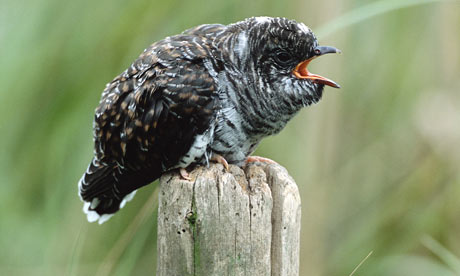
Apparently George is a Tenza****.  That means he’s an alien that floats around looking for willing parents, then adapts to become part of the family.  The Doctor likens him to a cuckoo, but we’re not sure about that.  Cuckoos replace and kill your young.  Alex and Claire didn’t have any young, so how is this similar?  Considering we’re supposed to want Alex to embrace his son (although he obviously loves him from the start, so no big change there), isn’t it a bit dodgy comparing him to a psychotic bird?

It’s probably supposed to be a heartening case for adoption, but all this information is spewed so quickly and so late (and complete with dodgy cuckoo metaphors) that we’re left feeling like Alex, stood there gawping and confused.  It’s a nice moment when father and son embrace, but it barely scratches the surface of what’s going on here.  What about Claire?  Is Alex going to tell her the truth about George?  Does George know he’s not a real boy?  It’s a very Doctor Who concept, that you can love someone even if they’re an alien, and we like it, but it’s not given the weight it deserves.

The plot’s just muddled.  Why does there need to be a doll's house, if it’s doing the same job as the cupboard?  Why are there living dolls, and why do they transform people into other dolls?  Why did George’s parents think it was a good idea to metaphorically put all his fears in the same room as him?

But all that’s just the tip of the iceberg.  What really bugs us about Night Terrors is what it does with Amy and Rory.

The last episode saw them halt the search for their daughter.  That’s improbable enough to begin with – Steven Moffat’s mishandling of that storyline has reached stupefying levels, leaving us wondering if we’re even the same species as Amy and Rory, let alone understanding their actions.  And this week, one episode later, they rush to the aid of a child.  You know, like that thing they lost.

You’d think this might spark some parallels with their own situation.  It might even rescue some of the doldrumy scenes in the doll’s house, the same way Neil Gaiman used Amy and Rory’s personal demons to turn running down corridors into sheer character development.  But no.  Amy and Rory don’t notice any parallels, they don’t ponder any significance.  Rory even sits through Alex’s impassioned speech about never sending his beloved son away without blinking.  Mr Having A Family Is His Dream?  It’s particularly hard to believe that Rory could watch a father’s love for his child and not respond, because Arthur Darvill is on fire this week, every mannerism lights up the screen and he really makes the most of his dialogue, so why doesn’t Rory react here?  How, in an episode that seems entirely relevant coming after the loss of Melody, did no one think to make the connection?  It should have been the entire point of the episode!*****

After that there’s a nothing scene of the gang sitting on a wall, which could and should have made room for some epiloguey cool-down, and then Amy has the nerve to say she can’t think where or when to go next.  If that doesn’t sound totally insane coming from someone whose baby is a hostage somewhere, then you’re one of the lucky people who gets where Steven Moffat is coming from, and should probably seek counselling.

Despite it all, Night Terrors isn’t that bad.  At this point we’re quite partial to anything that doesn’t have River Song in it, and it’s not Mark Gatiss’s fault that the wretched arc makes this episode look thoughtless and dim.  The plot’s a reheated Fear Her via The Lodger, but we’ve seen worse.  It’s at least funny in places, and although it may not have been a good idea to make it funny, what with it being intended as scary, funny’s good.  We like funny.

Stay tuned for the final moments when, in a masterstroke of trick photography, we are sneakily reminded of the Doctor’s impending fate, via the brilliantly sly technique of shoving it in screen-hogging close up for no reason whatsoever.


* Although as it turns out, the entire point of George’s ‘monsters’ is that they are from outside.  So how is his bedroom the scariest etc. etc.?

** Apparently the Doctor hasn’t made a house call in a while.  Hmm.  Doesn’t he visit people and solve their problems every single week?

*** The ‘listen to me’ line is glorious at the end of The Pandorica Opens, as we get to see a completely new side of the Doctor, but in this trite scene it doesn’t work at all and even detracts from that wonderful Series 5 moment.

**** This is surely a deus ex machina: there’s no way the audience can figure it out, it’s not based on anything set up earlier, and there’s no reason for the Doctor to take thirty-five minutes to come up with it.  It’s a familiar Doctor Who cheat, but a cheat nonetheless.

***** Apparently Night Terrors was swapped with another episode, meaning this was not meant to follow Let’s Kill Hitler.  To this we say: we don’t care.  It follows Let’s Kill Hitler now, so what difference does that make to the 99.9% of viewers who don’t know they moved it?  Besides, they could have edited it, reshot it or just not moved it.  Putting a thematically similar episode all about rescuing a kid (but not their kid) right after Let’s Kill Hitler without any mention of these events is contemptuous to those tuning in every week.  In a series that demands you pay careful attention to everything, this is even more awkwardly obvious.

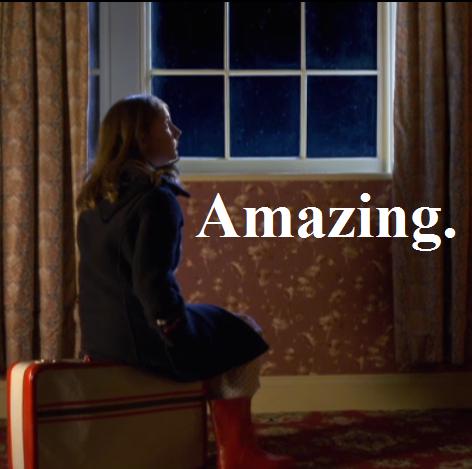
Bedroom picture from tidystuff.com.
Cuckoo picture from The Guardian.

Tuesday, 30 August 2011

Needs More Hitler

Doctor Who
Let's Kill Hitler
Series Six, Episode Eight


The Radio Times called Let's Kill Hitler ‘a romp’.  That's code.  'Romp' is a nice way of saying 'frivolous entertainment not meant for those wearing thinking caps'.  That's not a surprise: something called Let's Kill Hitler was obviously, obviously going to be a funny episode.

But coming right after the loathsome A Good Man Goes To War, which asked a lot of questions, dropped a bombshell and left us hanging for two months, terrified the Doctor was a... well... y'know*, Let's Kill Hitler is poorly timed.  We want answers, not Carry On Up The Third Reich.

Inappropriate timing is part of the joke, because you weren't expecting it and anything you weren't expecting is therefore clever.  (Ditto funny.)  You'd never expect to see the quest for Amy and Rory’s daughter, the truth about River Song, a Terminator and Adolf Hitler in the same story.  (Although you do now expect Moffat to leave a big gap between cliffhanger and resolution, or just skip the latter entirely, because he keeps doing it.  The whole point of a cliffhanger is how the characters get out of it - skipping the next few moments robs the viewers and makes the writer look like he either couldn't get out of it, or couldn't be bothered.  Do it often enough and you just stop caring.  Oh, he didn't bother.  Again.  What happened next?  Your guess is as good as ours.)  The plot's eclecticism is played for laughs, along with everything else, but cut the Hitlery Terminatory baggage and it's actually a really important episode.

It's River's big day, the moment where she meets the Doctor for the first time.  Make a tick in your blue diaries, everybody.  Except… it's not what she said happened in The Impossible Astronaut.  And her brand new back-story, growing up alongside Amy and Rory as their best mate Mels, hasn't been set up at all**.  How hard would it have been to mention Mels just once before this episode?  Seriously, we get nothing?

(And hang on... if Mels has been there all along, how has she only just caught up with the Doctor?  He’s been to Leadworth loads of times.  Summoning him is now so easy you can do it with a Mini Cooper and a crop field, so what's she been doing all this time, besides not going to weddings?)

Said back-story is a sneaky attempt to tie up the quest for Melody as quick as possible.  'You got to raise me after all!' declares Mels.  Oh well, that’s okay then.  Phew, Amy and Rory, you can relax.  (Actually, Amy and Rory are already pretty relaxed.  They don’t seem that fussed about the abduction of their newborn baby, or about Mels becoming a psycho killer, or about the Doctor counting down to their prime dating years***.  Maybe it’s because they missed the entire pregnancy, so haven’t really got it into their heads that they even have a child.  Oh well.  Fascinating drama it isn't.)

Sorry guys, it doesn't work like that.  Not only were the three of them growing up together, and thus not raising anybody, but Amy and Rory never knew who Mels was, and apparently had no effect on her as a person.  No biscuit, Mr Moffat: this is not an okay way to resolve the story.  It's cheaty, fingers-crossed, change-the-rules swindling, and we've come to expect... well, this really.

As soon as a gaudy sports car hurtles into the episode, we assume River has arrived.  Who else could be this nauseating without even being on screen yet?  But no, it’s someone new, although just as irritating.  Gun-toting, eyebrow-raising, quip-flinging Mels is one of those characters you're clearly meant to love purely because the writer thinks they're great.  Alas, characterisation is about more than sassy one-liners and other characters telling them how zany and cool they are.  Mels falls flat on her smug face.  How could she not? 

Thank God Mels is River.  That way, these two revoltingly smug characters can’t meet, which would surely cause the TV to melt.

Which brings us to the most loathsome person in the episode.  No, not Hitler.

Well, that is literally what this episode tells us.  Those tiny people stop their mission to punish Hitler so they can take out Melody Pond.  Seriously?  River Song is a bigger war criminal than Hitler?  For killing one person?  That's right kids; World War II and the Holocaust are not as bad as no more Doctor Who.

You're clearly meant to love River, or she couldn't get away with all those one-liners and giggles, but you can't just tell us to love a character.  River's ‘charm’, her mystery, her superiority over and love for the Doctor are entirely unearned.  The writer says she's awesome (or has been or will be), the Doctor agrees and that's the end of it.  All that's left for Alex Kingston to do is to ratchet the sass and the va-va-voom up to 11 and listen for the obedient 'Squee!'  Each new appearance increases our desire to see her dive into a woodchipper.

At least we learn a few things about her, although for an episode of answers, this still leaves us with more questions than ever.  Most of them formed from the word 'huh?'  We learn how she can fly the TARDIS, why she's called River (even though we learned a different reason for that last episode), why she took up archaeology and even why Alex Kingston ages in the wrong order. 

Oh, now I get it!

Each answer is very knowing and smug, and hence not very satisfying.  Every time Moffat explains something, it feels like cheating.

And speaking of 'knowing' and 'smug', how about Hitler?  It's a deliberately jokey title, the inclusion of Hitler in the story is a joke, and the fact that he's bundled out of the story within three minutes is an even bigger joke.  The fourth wall doesn't know what hit it: every line of dialogue featuring Hitler comes with an implied exclamation mark.  It's Hitler!  Hitler's a lousy shot!  I'm putting Hitler in the cupboard!  

Those of us who thought Victory Of The Daleks was a gross simplification of World War II now have distinctly eggy faces.

Although some of us enjoyed that one.  Weeee, spitfires in space, narrrrrrnarrrrrr jujujujujuju!

At least Mark Gatiss wasn't taking the piss.

What else do you expect?  It’s Hitler.  You have to laugh.  If Doctor Who dealt with actual historical horror, you’d get The Fires Of Pompeii, or God forbid, The Myth Makers.  Look, they all die and the Doctor helped it happen.  Er… thanks.

So what of the Terminator?  The Tesselecta is a shape-shifting robot filled with miniaturised time-travelling policemen.

It could have been neat if, again, it didn't just go for laughs.

You expect me to take a Beano comic strip seriously?

The crew have silly dialogue, their improbably homicidal service robots are silly, and everyone falls over when the thing moves, like they're on the Enterprise.

Considering how fun this idea is, I found them all boringly serious. 

These tiny people are rubbish at their job.  If they only punish people at the end of their established timelines what’s with the Nazi they 'clean up' and 'leave to the antibodies' at the start?  They kill him without checking how long he’s supposed to live, surely messing up the timeline.  And how incompetent are they that they’ve only just noticed they’re seven years too early to get Hitler?  Whoops.  And why do they even need the 'antibodies' to kill unauthorised visitors?  No one can get in unless they miniaturise them. 

Moffat could have paralleled their mission with the Doctor's; after all, he zips around righting wrongs, so do they to a fashion, with the Doctor often getting even more deadly results.  Isn't that worth mentioning?  Alas, Moffat's got his funny on, so the episode just doesn't stop there, just as the controversial concept of killing Hitler and potentially creating a much nicer timeline is never even acknowledged.  Waste.

Yeah, but then it would be Red Alert.  I enjoyed the Doctor’s reaction to the Tesselecta.  His shocked line 'You got yourselves time travel so you decided to punish dead people?' is very decisive.  These are stupid, bad people.  I didn’t need a parallel.  After the previous episode, I’m sick of the Doctor being compared to a warmonger with a God complex.  Yes, he goes around judging people when he has no right to, but stop pointing it out.  It’s a flaw in your show, not something clever to discuss.

Normally you cling to Matt Smith, whose performance is a constant highlight in weaker episodes but the Doctor in Let's Kill Hitler is totally uninspiring.  

He's in comedy mode, shouting most of his lines and he treats his impending death like an excuse to try out his wobbling, gurning skills.

Oh oh oh!  While Smith is uncharacteristically dull for the first half of the episode, once the Doctor is poisoned, his performance turns GOLD. 

As for his premature death, they've got to be having a laugh.  In a series that hinges on his definite and unchangeable death happening somewhere else, we're supposed to worry about him copping it here?

Also, the ultimate weapon against the Doctor is a Time Lord?  The one thing in the universe with enough power to bring the Doctor back from death?  Is this not, perhaps, the worst weapon you could possibly use against him?  Besides which, the Judas poison (thought we were done with the God references, sigh) is obviously the ultimate weapon, not River (regeneration disabled?). 

Still, lipstick makes a pretty good Doctor-killer, given that he's kissed most of the women he's met.  The Silence did their homework.

As for Amy and Rory, or Mr and Mrs Let’s Just Hug And Wait For Death (Ian and Barbara were never this pathetic), they just accept the loss of their baby to a torturous upbringing full of loneliness and brainwashing, knowing she'll grow up to be a psychopath with more than one death to look forward to****.

But never mind that.  It's Hitler!  In a cupboard!


* It heavily implied that the Doctor was going to care for a little girl he knew he was going to have a sexual relationship with when she was older.  That’s called grooming.  Oh my God, oh my God, oh my God.

**However, it does save the Doctor from the whole grooming thing.  He didn’t know River as a child after all.  Thank God, thank God, thank God… 

***The Doctor cares more about River than they do, which suggests it’s because he fancies River, rather than this is an abducted child.  So when the Doctor says ‘You know who she grows up to be, so you know I will find her’ and ‘As first dates go, I’d say that was mixed signals’ why are they not horrified?  At least Rory should be.  So you stole my wife and now you’re taking my daughter?  He punches two Nazis this week; PUNCH THE DOCTOR. 

****'We have to let her make her own way now.'  Guys, she’s not a hedgehog you’re releasing into the wild.

Friday, 26 August 2011

Our Hero

To pass the time until tomorrow, here's Neil.


Trying to improve the Daleks' Sky signal.

Neil Is The Best Dalek

What? You mean the 24 hours we spent coming up with the title wasn't enough? We're supposed to write actual posts?

Okay, so, welcome to Neil Is The Best Dalek. So-named in honour of the unappreciated Dalek who's usually loitering at the back wielding a largely unnecessary drinks-tray attachment instead of a sink plunger.

This is a review blog for geeks. There are two of us writing this thing,

So it's completely possible to just, say, hijack what the other one is writing in a really annoying way.

and we don't always agree. So it'll be kind of like a normal review site, except it talks to itself.

We're always watching movies, sometimes we watch TV, we own far too many DVDs, and there might be a few news items and ramblings into the bargain as well.

Excited yet?

First review will be Doctor Who: Let's Kill Hitler. It's on BBC1 tomorrow at 7.10pm. It will probably suck.

The episode, not the review.